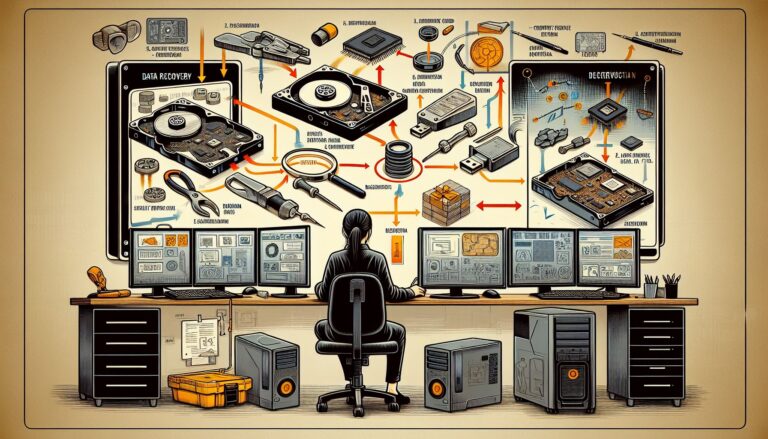

Unraveling the Intricacies of Data Recovery and Computer Forensics
Read Time:2 Minute, 34 Second
In the digital age, where vast amounts of data are generated and stored on a daily basis, the need for effective data recovery and computer forensics processes has become increasingly crucial. Whether it’s retrieving crucial information from a malfunctioning hard drive or investigating a cybercrime, the field of data recovery and computer forensics plays a vital role in ensuring the security and integrity of digital information.
Introduction to Data Recovery
Data recovery is the process of retrieving lost, deleted, or corrupted data from storage devices such as hard drives, USB drives, and memory cards. There are various reasons why data loss may occur, including hardware malfunctions, accidental deletion, software corruption, and cyberattacks. Regardless of the cause, it is essential to have a reliable data recovery process in place to minimize the impact of data loss on individuals and organizations.
Techniques of Data Recovery
Data recovery can be achieved through a variety of techniques, ranging from simple software-based solutions to complex hardware repairs. The most common methods of data recovery include:
-
Software Based Recovery: Utilizing specialized software tools to scan and recover lost data from storage devices. This method is suitable for recovering data from logical failures such as accidental deletion or formatting.
-
Hardware Based Recovery: In cases where the storage device has suffered physical damage, hardware-based data recovery techniques may be required. This involves repairing or replacing faulty components in the storage device to retrieve the lost data.
-
Remote Data Recovery: With the advancement of technology, remote data recovery services have become increasingly popular. Remote data recovery allows technicians to access and recover data from a storage device over the internet, minimizing downtime and increasing efficiency.
The Role of Computer Forensics
Computer forensics, on the other hand, is a branch of digital forensic science that focuses on the investigation and analysis of digital evidence for legal purposes. Computer forensics is commonly used in cases involving cybercrimes, intellectual property theft, fraud, and data breaches. By examining digital devices and networks, computer forensic experts can uncover crucial evidence that can be used in legal proceedings.
Investigative Techniques in Computer Forensics
Computer forensics involves various investigative techniques to uncover digital evidence and analyze it effectively. Some of the key techniques used in computer forensics include:
-
Disk Imaging: Making an exact copy of a storage device to preserve the original data and prevent tampering.
-
File Recovery: Using specialized software tools to recover deleted or hidden files from a storage device.
-
Network Forensics: Monitoring and analyzing network traffic to identify and investigate security incidents.
-
Memory Forensics: Analyzing the memory of a computer system to identify malware, unauthorized activity, or other suspicious behavior.
Conclusion
In conclusion, data recovery and computer forensics are essential components of modern digital investigations. Whether it’s recovering lost data or investigating cybercrimes, the field of data recovery and computer forensics plays a crucial role in safeguarding digital information and ensuring the integrity of digital systems. By understanding the techniques and principles underlying data recovery and computer forensics, individuals and organizations can better protect themselves from the risks associated with digital data loss and cybercrimes.


Happy
0 %

Sad
0 %

Excited
0 %

Sleepy
0 %

Angry
0 %

Surprise
0 %
 0
 0